Table of Contents
- Why Garage Ventilation Matters
- Can You Install a Dryer in a Garage?
- Can You Vent a Dryer Into a Garage?
- Why Venting Into a Garage Is Dangerous
- Moisture Problems and Mold Growth
- Fire Hazards Caused by Lint
- What Building Codes Say
- Real News Stories and Homeowner Cases
- Safe Dryer Vent Hose Installation Tips
- Better Alternatives for Dryer Venting
- Frequently Asked Questions
- Final Thoughts
Why Garage Ventilation Matters
A garage can feel like a giant metal box during summer. Heat builds up quickly, airflow is limited, and moisture tends to linger longer than inside the house. When a dryer releases warm air and humidity into this environment, the garage can become even more uncomfortable.
Think of it like pouring steam from a boiling kettle into a closed room every single day. Eventually, the moisture settles onto walls, ceilings, storage boxes, and tools.
Proper garage ventilation helps reduce humidity, improve air quality, and prevent long-term structural damage.
Can You Install a Dryer in a Garage?
Yes, many homeowners install dryers in garages, especially in homes where indoor laundry space is limited. However, proper installation is extremely important.
Both electric and gas dryers can work in garages, but they require:
- Proper electrical or gas connections
- A safe dryer vent hose system
- Enough airflow and ventilation
- Protection from excessive moisture
Gas dryers require additional caution because garages may contain gasoline vapors or chemicals. In some areas, dryers must also be elevated above floor level for safety reasons.

Can You Vent a Dryer Into a Garage?
Technically, you can vent a dryer into a garage. But in most situations, you should not.
Most building codes recommend venting dryers directly outdoors rather than into enclosed spaces like garages, attics, or crawl spaces.
Every drying cycle releases:
- Warm air
- Moisture
- Lint particles
Without proper exhaust routing, these materials build up inside the garage over time.
Why Venting Into a Garage Is Dangerous
Moisture Problems
Dryers remove water from wet clothes. That moisture has to go somewhere. If the dryer vent hose releases it into the garage, condensation can form on walls, windows, and metal surfaces.
Air Quality Issues
Dryer lint may look harmless, but tiny airborne fibers can spread throughout the garage. This may affect indoor air quality, especially for people with allergies or breathing sensitivities.
Heat Buildup
Garages already trap heat during summer. Adding hot dryer exhaust can make the space feel even more suffocating.
Moisture Problems and Mold Growth
Excess moisture is one of the biggest dangers of indoor dryer venting.
Over time, humid air can lead to:
- Mold growth
- Mildew smells
- Rusty tools
- Damaged drywall
- Warped wooden shelves
Some homeowners discover mold behind storage cabinets or notice cardboard boxes becoming damp after months of improper dryer venting.
Running a dryer into the garage is similar to operating a humidifier nonstop in a closed basement.

Fire Hazards Caused by Lint
Lint is highly flammable. According to fire safety organizations, clogged dryer vent hose systems contribute to thousands of house fires every year.
When lint accumulates inside a garage or inside the duct itself, airflow becomes restricted. Poor airflow forces the dryer to work harder and generate more heat.
That combination of heat and trapped lint can become dangerous.
This is why experts recommend:
- Cleaning the dryer vent regularly
- Using metal dryer vent hose materials
- Avoiding plastic or vinyl ducts
What Building Codes Say
Most modern building codes require dryers to vent outdoors.
The International Residential Code (IRC) and International Mechanical Code (IMC) generally prohibit exhausting dryer air into:
- Garages
- Attics
- Crawl spaces
- Wall cavities
The main reason is simple: moisture and lint can create health and fire hazards inside enclosed areas.
Local regulations may vary, so homeowners should always check local building codes before installing a dryer vent hose system.
Real News Stories and Homeowner Cases
Improper dryer venting is not just a theoretical problem. Many homeowners have reported serious moisture and mold issues caused by venting a dryer into enclosed spaces such as garages or closets.
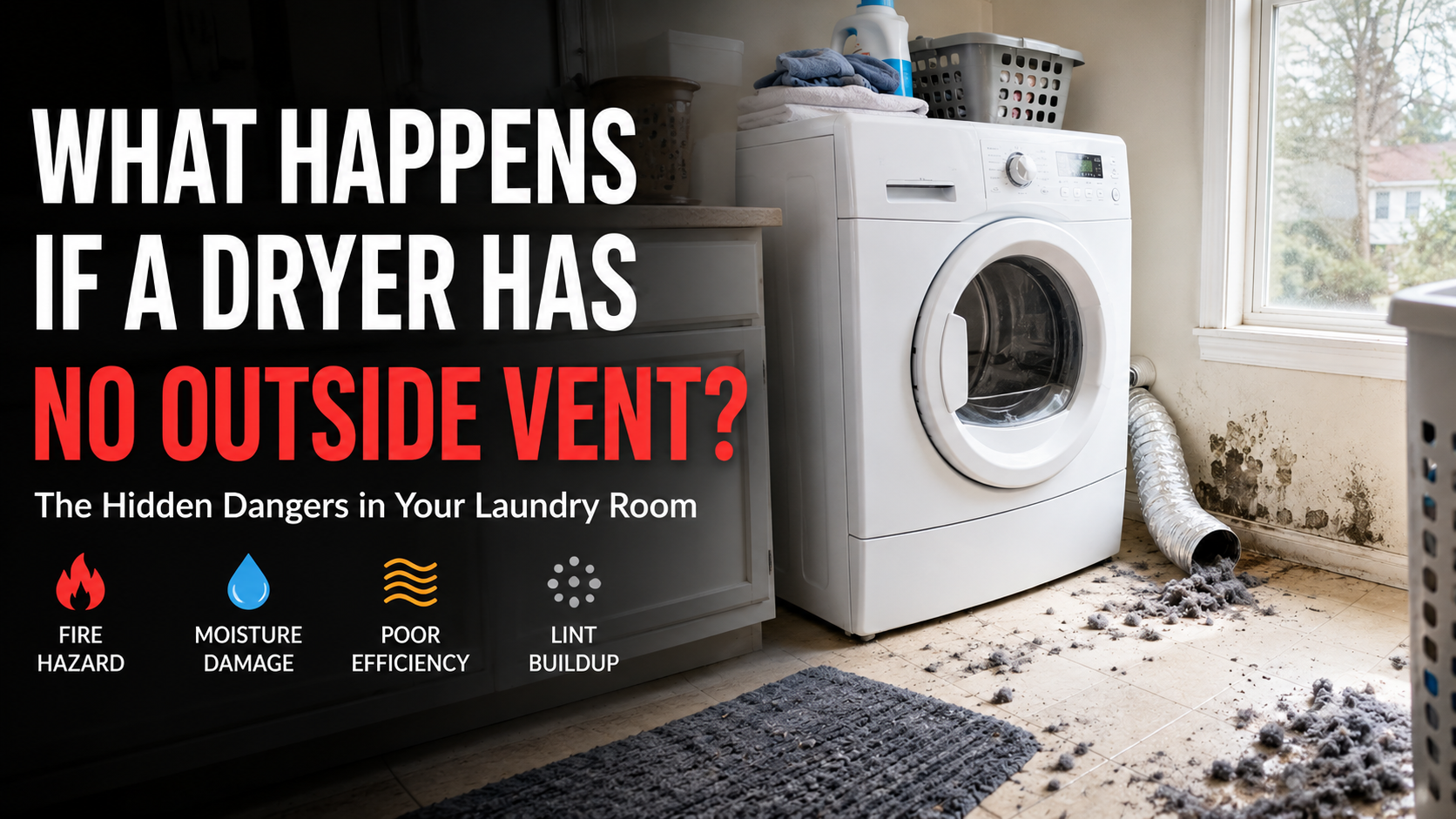
In a homeowner discussion shared on Reddit, a renter discovered that the dryer vent terminated in a garage closet rather than outdoors. After months of daily use, the enclosed area became covered with mold, condensation, and thick lint buildup. The homeowner also noticed that the dryer became less efficient and the garage felt unusually humid during every drying cycle.
Source: Reddit – Dryer Vent Ends in Garage Closet
Fire safety organizations have also warned about the dangers of clogged dryer vent hose systems. According to the National Fire Protection Association (NFPA), thousands of residential dryer fires occur every year in the United States, and failure to clean lint buildup is one of the leading causes.
Source: NFPA Home Dryer Fires Report
These real-world examples show how something as simple as improper dryer ventilation can slowly lead to expensive structural damage, unhealthy indoor air, and even serious fire hazards.
Safe Dryer Vent Hose Installation Tips
If you install a dryer in the garage, follow these dryer vent hose best practices:
- Use rigid metal or semi-rigid aluminum ducting
- Keep the vent path as short as possible
- Avoid excessive bends or sharp turns
- Clean lint buildup regularly
- Secure all connections with clamps
- Vent directly outdoors whenever possible
A properly installed dryer vent hose improves airflow, reduces drying time, and lowers fire risk.
Better Alternatives for Dryer Venting
Vent Outdoors
This is the safest and most recommended solution.
Install a Wall Vent
Exterior wall vents help direct airflow outside while preventing pests and outdoor air from entering.
Use a Dryer Booster Fan
For long vent runs, a booster fan can improve airflow efficiency.
Consider a Ventless Dryer
Heat pump dryers and ventless models may work well in homes where outdoor venting is difficult.
Frequently Asked Questions
Can I vent an electric dryer into the garage?
Even electric dryers produce moisture and lint, so outdoor venting is still recommended.
Is indoor dryer venting legal?
Many local building codes prohibit indoor dryer venting in enclosed spaces.
Can dryer moisture damage my garage?
Yes. Excess humidity can cause mold, mildew, and rust over time.
What is the best dryer vent hose material?
Rigid metal or semi-rigid aluminum ducts are generally considered the safest options.
How often should I clean my dryer vent?
Most experts recommend cleaning the dryer vent hose at least once a year.
Final Thoughts
Installing a dryer in the garage is common, but venting the exhaust directly into the garage is usually not a good idea.
Moisture, lint, heat, and poor airflow can create serious long-term problems. A properly installed dryer vent hose that exhausts outdoors is the safest and most effective solution.
Taking the time to improve your dryer ventilation system today can help protect your home, improve air quality, and reduce fire risks in the future.