How to Inspect a Dryer Vent
Table of Contents
- Introduction & Why It Matters
- What Is a Dryer Vent?
- Lint Buildup Fire Risk
- Improper Materials
- Longer or Poorly Routed Vent Paths
- Long or Poor Vent Paths
- Indoor Vent Termination Issues
- Carbon Monoxide & Gas Leak Risks
- Fumes & Indoor Air Quality
- Inspection Steps
- When to Call a Professional
- Dryer Vent Hose Common Problems
- Conclusion & Back to Top
Introduction & Why It Matters
Imagine a regular laundry day: you throw in a load, add detergent, and start the dryer. A few hours later, you pull out warm, fresh laundry — clean and dry. It’s a familiar routine in many households. Yet, behind that simple convenience lies a crucial safety component most people overlook: the dryer vent system, including the dryer vent hose and ducts that carry hot air and moisture outside your home.
If your dryer vent is blocked, damaged, or improperly installed, it can lead to severe issues — from energy waste and mold growth to hidden fire hazards. In fact, annual data reveal thousands of home fires are linked to neglected dryer vents. In this guide, we’ll walk through how to inspect your dryer vent for common safety issues and what to do about them.

What Is a Dryer Vent?
A dryer vent is the duct system that carries hot, moist air — and lint — away from your dryer and out of your house. It includes an internal duct or dryer vent hose, often flexible, and an exterior vent cap or hood that allows air to escape. The goal is to remove moisture and lint so that your dryer can work efficiently and safely.
Without proper airflow, heat and lint accumulate inside the vent line, making your dryer work harder and increasing the risk of overheating or fire.
1. Lint Buildup Fire Risk
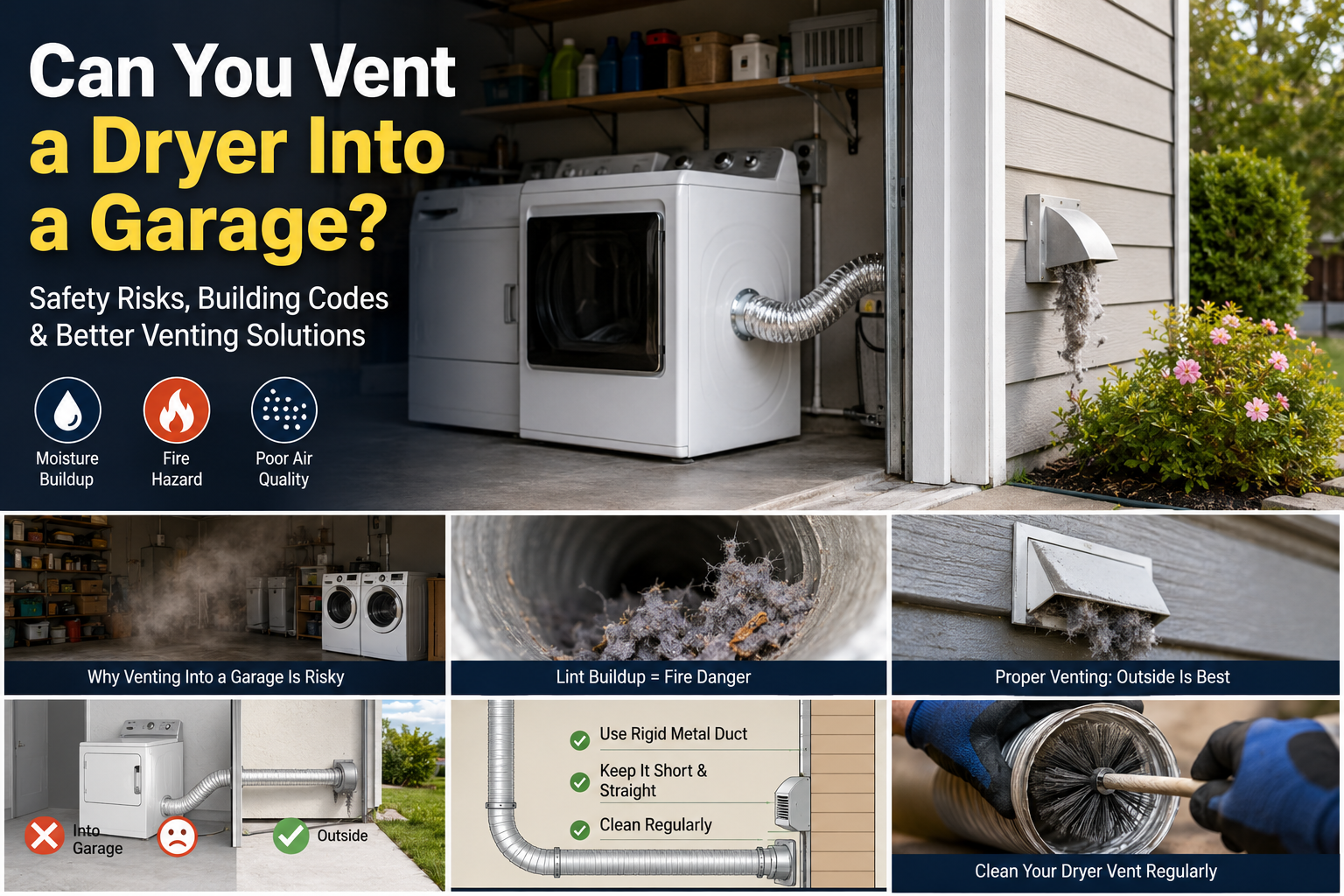
One of the most common issues found during home inspections is lint accumulation inside the dryer vent. Lint is highly combustible, and when it builds up deep inside the vent system, it restricts airflow, causing heat to build up and increasing the likelihood of fire.
Real cases have shown that lint buildup is not just an efficiency problem — it’s a fire hazard. According to a 2025 industry report, dryers and laundry units are implicated in thousands of fires annually, often due to blocked vents.
Check for excess lint by feeling for warm spots, watching for longer dry times, and inspecting the exterior vent discharge while the dryer runs. If you see little to no airflow or a burning smell, it’s time to clean.
2. Improper Vent Materials
Many older homes still use outdated and unsafe vent materials such as thin plastic or foil hoses. These materials can sag, trap lint easily, and are generally not fire-resistant.They are more prone to develop blockages and can melt or trap hot lint against combustible surfaces.
Inspect the vent hose and, if possible, replace it with a rigid or semi-rigid metal duct— these materials are safer and allow better airflow.
3. Longer or Poorly Routed Vent Paths
Dryer vents that are too long, excessively zig-zagged, or routed through multiple bends are another common hazard. These configurations trap lint more easily and restrict proper airflow, forcing the dryer to overheat.
Inspect the vent run between the dryer and the exterior vent hood. Ideally, the path should be as short and straight as possible.
4. Vent Termination Inside the Home
A dryer vent must terminate outside your home — not in an attic, crawlspace, or garage. Discharging warm, moist air indoors creates a risk of mold, rot, and moisture damage and allows lint to travel into sensitive areas.
Make sure your dryer vent ends at a weather-proof exterior vent hood with a flap or grille to prevent pest entry and backdrafts.
5. Carbon Monoxide & Gas Leak Risks
If you use a gas dryer, obstructed vents can also cause dangerous gases like carbon monoxide (CO) to accumulate in the home. CO is odorless and can lead to headaches, dizziness, nausea, and more severe health issues.
Ensure your vent system is unobstructed and install a CO detector near laundry areas as an added safety precaution.
6. Chemical Fumes & Indoor Air Quality
Clogged or damaged dryer vents don’t just trap lint; they can also cause chemical fumes from fabric softeners or scented dryer sheets to leak back into your home. These compounds, known as volatile organic compounds (VOCs), can irritate respiratory systems and worsen indoor air quality.
Regular inspection helps identify early signs of interior leaks that could impact health.
How to Inspect Your Dryer Vent (Step-by-Step)
Follow these steps for a thorough safety check:
- Unplug the dryer and pull it away from the wall.
- Check the vent hose for kinks, soft spots, or damage.
- Disconnect and inspect the hose for lint build-up.
- Inspect the interior duct using a brush or vacuum with a hose attachment.
- Check the exterior vent hood while the dryer runs — feel for strong airflow and an unobstructed exit.
- Listen and smell for unusual sounds or burning odors during operation.
For heavy buildup or hard-to-reach ducts, consider professional cleaning.
When to Call a Professional
If you notice persistent issues — weak airflow, burning smells, rising energy bills, or a loud dryer — it might be time to hire a licensed vent specialist. Some communities even require periodic professional cleaning for building safety, especially in shared structures like condos.
Dryer Vent Hose Common Problems & Fixes
The flexible dryer vent hose is prone to twisting, crushing, and blockage. A crushed hose restricts airflow significantly. When inspecting, ensure the hose is free from sharp bends and replace it if it looks aged or damaged.
DIY kits are available, but if the hose is deeply clogged or hard to reach, professional tools can clear the vent more effectively.
Conclusion
Regularly inspecting your dryer vent — including the dryer vent hose and duct — is essential for safety, efficiency, and peace of mind. From lint buildup and improper materials to gas leaks and indoor air quality issues, knowing what to look for helps you catch hazards early.
Stay aware, keep vents clean, and make inspections part of your routine.