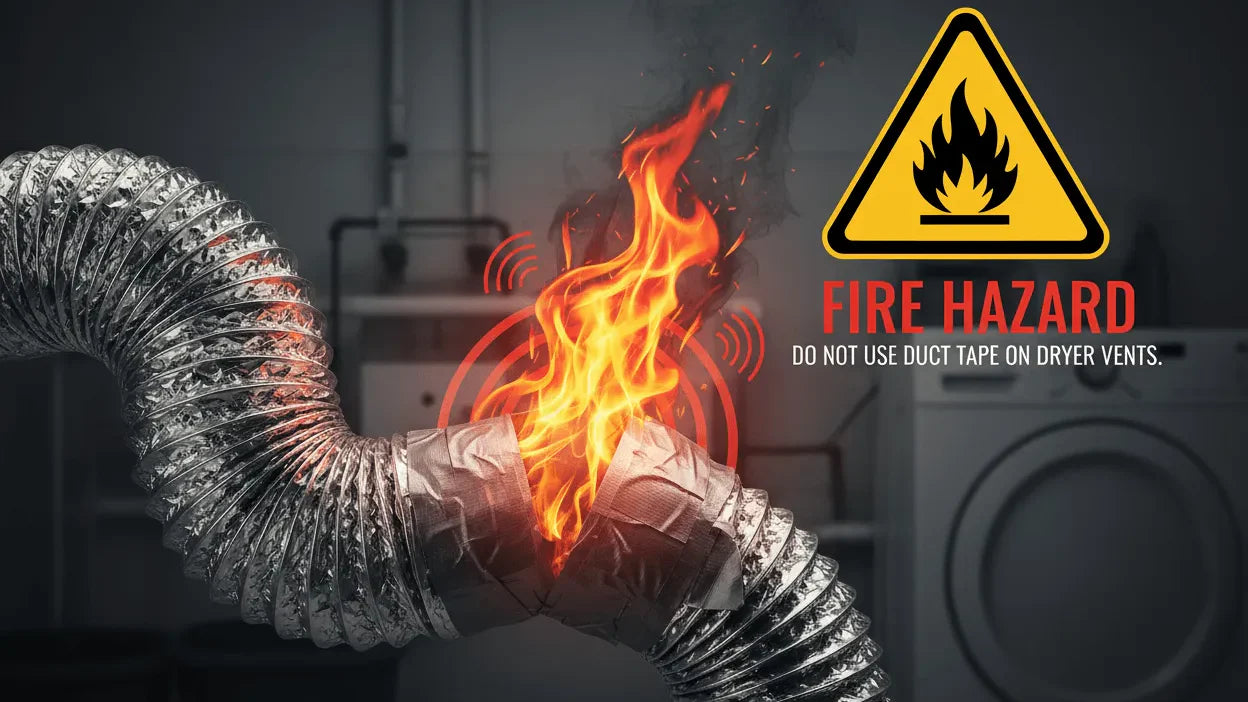
Many dryer fires don’t start with flames or sparks — they often begin with small, ignored issues in your dryer vent system. Clothes taking longer to dry, a burning smell, or excessive heat around your dryer may seem minor, but they can be signs of dangerous problems related to your dryer vent and dryer vent hose. According to National Park Service Data, over 15,000 home fires are sparked by clothes dryers each year, with lint buildup and vent issues being top causes of fire hazards.
Quick Navigation
- What Makes Dryer Vents a Fire Risk?
- Clogged Dryer Vent (Lint Buildup)
- Crushed or Kinked Dryer Vent Hose
- Using the Wrong Dryer Vent Hose Material
- Poor Ventilation and Long Vent Runs
- Loose or Disconnected Vent Joints
- Blocked or Damaged Exterior Vent Cover
- Lack of Regular Maintenance
- How to Prevent Dryer Vent Fires
- Final Thoughts
What Makes Dryer Vents a Fire Risk?
Dryers produce heat, moisture, and lint — a dangerous combination when airflow is restricted. When the dryer vent system is blocked or poorly installed, hot, moist air can’t escape properly, increasing the likelihood of overheating and ignition. Experts note that restricted airflow from lint buildup and vent issues is a leading cause of dryer-related fires.
Clogged Dryer Vent (Lint Buildup)
Lint buildup inside your dryer vent is one of the most common fire hazards. Even with regular cleaning of the lint trap, fine fibers can still escape into the vent hose and accumulate over time. This lint is highly flammable and can restrict airflow, forcing the dryer to run hotter than intended — the perfect recipe for fire risk. Read about dryer vent fire hazards and lint buildup.
Crushed or Kinked Dryer Vent Hose
If your dryer is pushed tightly against a wall or the vent is bent sharply, airflow can be restricted. Crushed or kinked dryer vent hose creates airflow resistance, which traps heat and lint, worsening the fire risk since lint can ignite at high temperatures. Experts advise ensuring a smooth, straight vent path to promote proper airflow and prevent lint accumulation.
Using the Wrong Dryer Vent Hose Material
Not all vent hoses are created equal. Plastic and foil ducts may be inexpensive, but they are also more likely to sag, trap lint, and can even melt under high heat. Codes and safety professionals recommend using rigid or semi-rigid metal ducts based on safety guidelines to improve airflow and reduce fire risks. See why proper vent materials matter.
Poor Ventilation and Long Vent Runs
Longer or overly complex dryer vent runs with multiple turns increase the chances of lint buildup and airflow resistance. A poorly designed vent path creates spots where lint collects and hot air lingers — contributing to overheating. Properly designed ducts allow hot air to exit the home efficiently.
Loose or Disconnected Vent Joints
Loose connections in your vent system can allow hot, lint-filled air to leak into walls or crawlspaces — hidden areas where heat and debris can accumulate dangerously. Home inspectors report finding disconnected vents behind dryers, leading to unseen lint buildup and amplified fire hazards.
Blocked or Damaged Exterior Vent Cover
The exterior vent cover is the final exhaust point for your dryer. If this opening is blocked by debris, nests, snow, or other obstacles, the hot air cannot escape, causing heat and lint to back up into the system. Experts recommend inspecting and cleaning the exterior vent regularly to prevent blockages.
Lack of Regular Maintenance
Routine maintenance is critical for preventing dryer vent fires. Professionals and safety organizations agree that many dryer fires are caused by failure to clean and maintain the vent system. Cleaning just the lint trap isn’t enough — vents themselves require professional cleaning at least annually for safe operation.
How to Prevent Dryer Vent Fires
- Clean the lint trap after every load.
- Inspect and clean the dryer vent hose every few months.
- Replace old or damaged dryer vent hoses with rigid metal ones.
- Install an easy-to-clean exterior vent cover that resists debris.
- Have your full vent system cleaned by professionals yearly.
To prevent dryer vent fires, maintaining proper airflow and regular cleaning is crucial. Fire safety experts recommend cleaning your lint trap every cycle and having vents professionally cleaned annually to reduce fire risks. Check official dryer fire safety tips.

Final Thoughts
Understanding common dryer vent problems and their causes can save lives and prevent house fires. Taking a bit of time to inspect and maintain your dryer and vent system can prevent costly and devastating consequences. Be sure to bookmark and share this guide with friends and family — dryer safety is essential for every home.