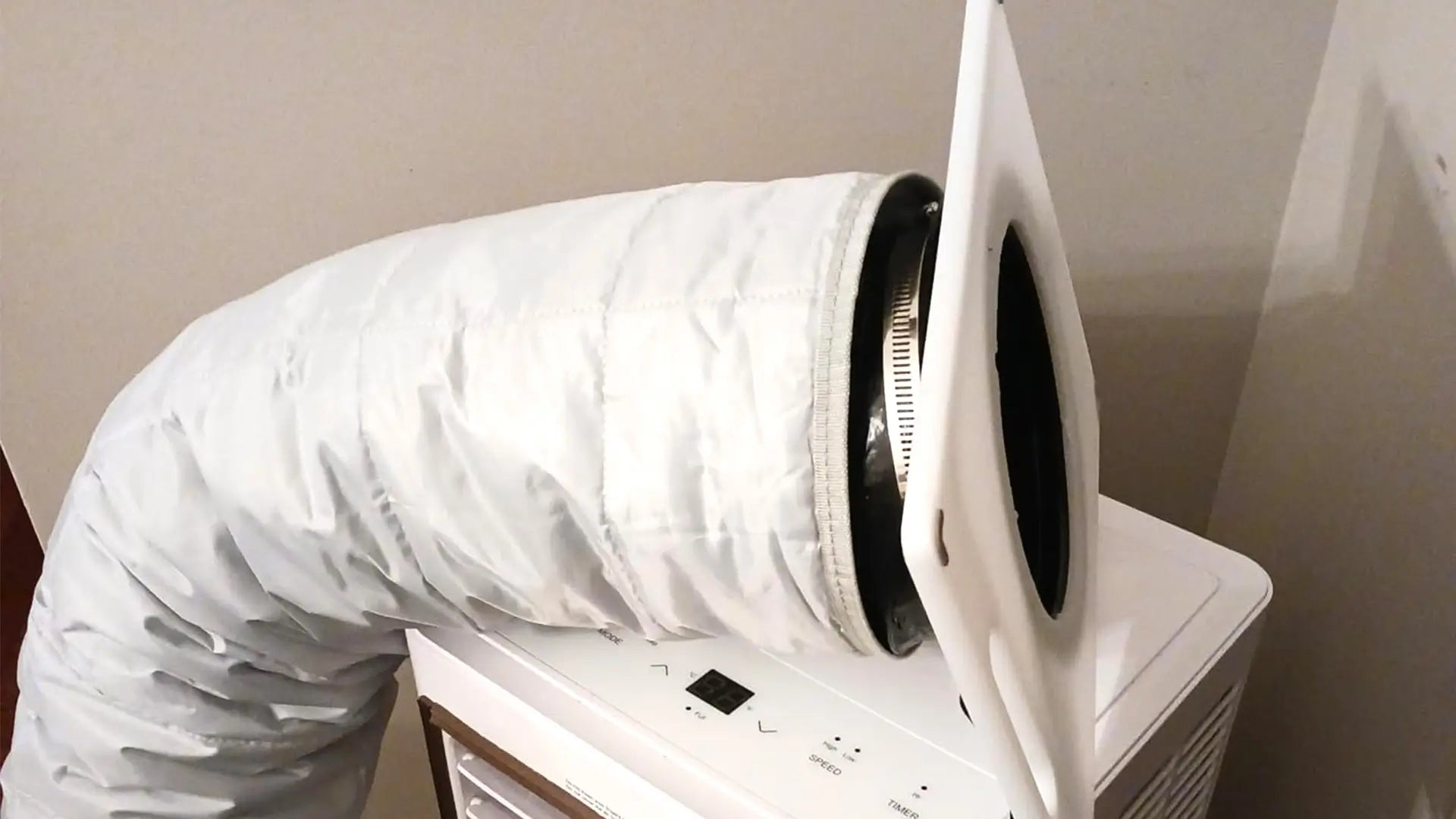
A few months ago, a close friend of mine called me in a mild panic. Her laundry room was located in the center of her house, far from any exterior wall. The installer had used a long, twisty, flexible hose behind the dryer that stretched far beyond its intended length. The main metal duct run climbed through cabinets, bent around beams, and disappeared into the ceiling toward a far-off wall vent. Every load now took forever to dry, the dryer felt burning-hot to the touch, and lint sometimes puffed out when she disconnected the hose. She Googled endlessly, got contradictory answers, and eventually asked me: “Who am I supposed to trust about this?”
This article exists because of that confusion. My goal is simple: to help you understand your entire dryer vent system, know the safe length rules for each component, calculate equivalent duct and hose length correctly, and make smarter decisions than what many competitor guides currently provide.
What Is a Dryer Vent System?
A dryer vent system is the engineered exhaust pathway that removes hot air, moisture, gases, and lint from a clothes dryer and releases them outdoors. While it might look like a simple pipe or hose, it is in fact a system where design choices compound into safety outcomes.
At a minimum, a dryer vent system must accomplish four things simultaneously:
- Maintain sufficient airflow velocity to push lint particles through the line without settling.
- Withstand continuous elevated temperatures without deforming, off-gassing, or increasing fire risk.
- Prevent moisture stagnation, which can lead to mold, duct corrosion, or wall damage.
- Provide a path that is cleanable and inspectable, meeting building code and fire safety standards.
- A dryer vent system is not built from one universal component. It has two fundamentally different sections, each with its own acceptable length, material rules, and purpose.
Dryer Vent Duct vs Dryer Vent Hose
Dryer Vent Hose (Transition Hose)
The dryer vent hose is the short, flexible connection between the back of the dryer and the main vent duct. It is designed for adjustability and ease of installation, not long-distance airflow.
Its purpose is to bridge the gap between the dryer’s exhaust port and the start of the main duct, while allowing slight movement for maintenance or installation alignment. It is almost always made from flexible aluminum foil laminate or flexible semi-rigid aluminum.
What it is not:
- It is not the primary exhaust channel for long distances.
- It should not snake through walls, ceilings, cabinets, or floors.
- It should not be excessively compressed, kinked, or coiled.
Dryer Vent Duct (Main Vent Line)
The dryer vent duct is the rigid or semi-rigid pipe that carries exhaust air from the dryer to the exterior of the home. This duct determines the system’s airflow efficiency, safety, and code compliance. Preferred materials include: Rigid galvanized steel, rigid aluminum duct, and UL-listed semi-rigid metal ducts.
What it is not:
- It is not made of plastic or vinyl
- It is not a foil dryer hose stretched to its maximum
- It is not a general-purpose flexible hose
How Long Can a Dryer Vent Hose Be?
A dryer vent hose should be as short and straight as possible.
- Ideal length: 0.5–2 ft (15–60 cm)
- Maximum recommended length: 4–5 ft (1.2–1.5 m)
Long flexible hoses increase airflow resistance, trap lint, and are more prone to kinking. For safety and performance reasons, the hose should never be used as a substitute for the main duct.
How Long Can a Dryer Vent Duct Be?
The dryer vent duct is subject to building codes and safety standards. Most residential guidelines are based on the International Residential Code (IRC).
- Optimal effective length: Up to 25 ft (7.6 m)
- Maximum allowed length: 35 ft (10.7 m)
However, the maximum length is not absolute—it must be reduced when elbows or bends are used.
Equivalent Length & Elbow Rules
Dryer vent performance is measured using equivalent length, which accounts for airflow resistance caused by bends and turns.
| Component | Equivalent Length Reduction |
|---|---|
| 90° elbow | –5 ft |
| 45° elbow | –2.5 ft |
Example: A 30 ft duct with two 90° elbows has an equivalent length of only 20 ft.

Why Dryer Vent Length Matters
Airflow and Drying Performance
Every foot of duct adds resistance. In rigid ducts, resistance grows linearly; in flexible hose, it grows super-linearly due to turbulence.
Long ducts cause:
- Reduced exhaust velocity
- Increased dryer back-pressure
- Longer drying cycles
- Higher electricity consumption
- Faster motor wear
Lint Buildup and Fire Risk
Lint is the biggest danger factor. When airflow slows, lint deposits inside the duct. The longer the duct, the more surface area for lint to stick to.
Restricted long ducts leads to:
- More lint
- Higher heat
- Lower airflow
- Less cleanability
This is why vent length is one of the strongest predictors of dryer safety risk.
Moisture and Structural Risks
Excessive duct length retains humid air longer. Condensation can form in cold zones of the duct, especially in:
- Ceiling cavities
- Basement sections
- Ducts passing through unconditioned spaces
Over time this may lead to:
- Metal duct corrosion
- Wall moisture damage
- Mold around vent exit points
- Water stains along the vent pathway
Long Layouts & Booster Fan Solutions
Some home layouts are not suitable for short dryer vent. Laundry rooms located far from exterior walls or on upper floors may require long duct runs with multiple turns. In these situations, a dryer vent booster fan can help improve airflow.
How a Booster Fan Works
A booster fan is installed in line with the dryer vent duct. When the dryer operates, the fan activates using an airflow or pressure sensor and adds extra force to move exhaust air through long or complex duct systems.
- Helps overcome resistance from long ducts
- Improves airflow velocity
- Reduces heat and lint buildup
Booster fans do not increase the code-allowed maximum duct length, but they significantly improve real-world performance and safety within permitted limits.
Recommended product: Dryer Vent Booster Fan for Long Duct Runs
Summary
A dryer vent system should be designed like any other safety-critical airflow system: optimized for performance first, checked for compliance second, and built with long-term cleanability and fire prevention in mind.
- Keep dryer vent hoses short and straight
- Limit dryer vent duct equivalent length to 25 ft when possible
- Never exceed 35 ft after elbow deductions
- Use rigid metal ducting whenever possible
- Consider a booster fan for long or complex layouts
By designing your dryer vent system correctly, you improve drying performance, reduce energy waste, and significantly lower fire risk.