Table of Contents
1. What Is Dryer Lint?
Dryer lint is a collection of tiny fibers that shed from clothing during the drying process. These fibers come from fabrics such as cotton, polyester, wool, and blended materials. As clothes tumble and hot air circulates through the drum, friction causes small fibers to detach and travel with the airflow.
These fibers are captured by the dryer’s lint screen — but not all of them.
- Fabric fibers
- Dust
- Pet hair
- Human skin cells
- Small debris from pockets
To understand how lint trapping systems work in more detail, you can read our guide on What Is a Dryer Lint Trap Box and How Does It Trap Lint?.
2. Why Dryer Lint Is More Serious Than You Think
2.1 Fire Risk: The Hidden Danger
Lint is extremely flammable. When it accumulates in the dryer vent or ductwork, it restricts airflow and allows heat to build up in the system.
Excess heat + restricted airflow + flammable material = a dangerous combination.
Routine lint maintenance significantly reduces fire risk and helps protect your home.
2.2 How Dryer Lint Causes Energy Loss
When lint builds up in the vent system, airflow becomes restricted. Your dryer must work harder and run longer to dry the same load of laundry.
Clogged Vent → Restricted Airflow → Longer Drying Time → Higher Electricity Use
Learn more in our detailed article: How Dryer Lint Contributes to Energy Loss and What You Can Do.
2.3 Why Your Dryer Takes Too Long to Dry
If your clothes feel hot but still damp at the end of a cycle, lint build-up may be the reason.
- Multiple cycles needed to dry clothes
- Excess heat in the laundry room
- Burning or musty smell
- Dryer shutting off mid-cycle
Read our troubleshooting guide here: Why Your Dryer Takes Too Long to Dry and How Lint Build-Up Is to Blame.
2.4 Dryer Lint and Allergies
Lint particles are small enough to become airborne, especially if they escape through indoor venting systems or duct leaks.
In sensitive households, accumulated lint can contribute to indoor air quality concerns.
Explore this topic further in: Dryer Lint: The Surprising Cause of Allergies and How to Manage It.
3. Where Does Dryer Lint Accumulate?
Lint does not only stay in the lint screen. It can build up in multiple areas:
- The lint screen housing
- Inside the dryer cabinet
- The transition hose behind the dryer
- The wall duct
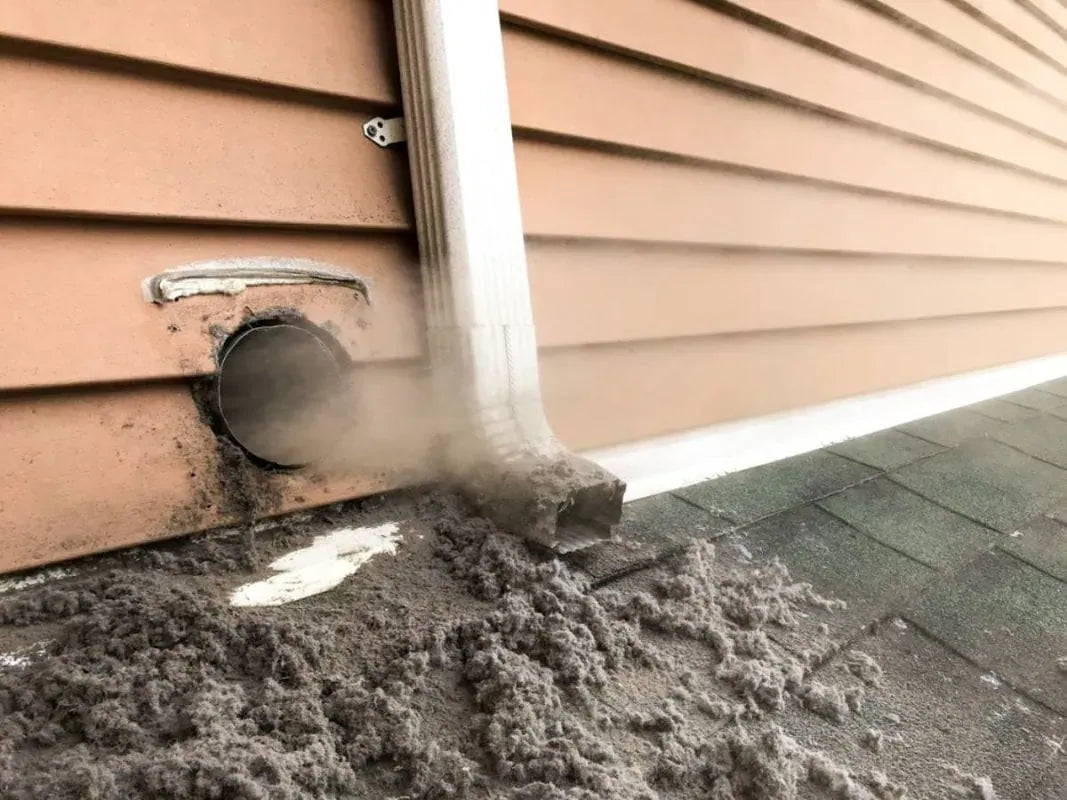
- The exterior vent cover
- Indoor vent systems (if used)
The longer the duct run and the more bends it has, the greater the chance of lint accumulation.

4. How to Clean Dryer Lint Properly
4.1 Clean the Lint Screen After Every Load
- Remove the lint screen.
- Peel off lint by hand.
- Check for residue buildup.
- Reinsert before the next cycle.
Tip: Wash the lint screen monthly with warm water and mild soap to remove fabric softener residue.
4.2 Deep Clean the Dryer Vent (Every 6–12 Months)
- Unplug the dryer.
- Pull it away from the wall.
- Disconnect the vent hose.
- Use a vacuum or vent cleaning brush.
- Inspect the exterior vent flap.
- Reconnect securely.
4.3 Using a Dryer Lint Trap Box
For homes with indoor venting setups, installing a lint trap box provides an additional layer of protection by capturing fine particles before they enter ductwork.
For installation guidance, see: How to Install a Dryer Lint Trap Box.

5. Can You Reuse Dryer Lint?
Dryer lint can have secondary uses when handled safely:
- Fire starters (outdoor use only)
- Compost (100% natural fibers only)
- Craft projects
- Temporary stuffing material
For more creative ideas, check out: 11 Creative Ways to Reuse Laundry Dryer Lint.
6. Signs You Have a Dryer Lint Problem
- Clothes take longer to dry
- The dryer feels excessively hot
- A burning smell during operation
- Visible lint around vent openings
- Higher electricity bills
- Excess moisture in the laundry room
7. Preventing Dryer Lint Build-Up: Best Practices
- Clean lint screen after every load
- Avoid overloading the dryer
- Use rigid or semi-rigid metal ducts
- Inspect exterior vents regularly
- Schedule annual vent cleaning
- Install a lint trap system if needed
8. Frequently Asked Questions
Is dryer lint dangerous?
Yes. It is highly flammable and increases fire risk when allowed to accumulate.
How often should I clean my dryer vent?
At least once per year. Large households may require cleaning every 6 months.
Can dryer lint increase electricity bills?
Yes. Restricted airflow forces the dryer to run longer, increasing energy consumption.
Does dryer lint affect indoor air quality?
It can contribute to airborne particles if ventilation systems are not properly maintained.
Conclusion: Small Fibers, Big Impact
Dryer lint may be small, but ignoring it can lead to serious consequences — from safety hazards to higher energy costs.
With consistent maintenance, proper venting, and smart lint management solutions, you can keep your dryer running efficiently while protecting your home.